The word trauma is everywhere these days. You open TikTok or Instagram and find someone with no training in psychology explaining how traumatic it is when your boyfriend or girlfriend doesn’t text back right away. And don’t get me wrong, that does hurt. The problem is that when everything is trauma, the word loses its weight, and you’re left without the tools to understand what is really happening to you.
Trauma is not what happens to you
Gabor Maté, a physician who worked with trauma for decades, offers a definition I consider key: trauma is not the external event, but the wound that event leaves in you. It’s no coincidence, trauma is the Greek word for wound.
From the EMDR tradition, developed by Francine Shapiro, there is also the distinction between big-T and little-t trauma. The first refers to catastrophic or uncommon events. The second, to more everyday experiences, like emotional neglect.
Having your city destroyed by an earthquake will definitely leave you with considerable trauma, that’s big-T. But never being picked for the soccer game at recess also leaves a wound, just a little-t one. Both leave a mark, just in different ways.
Three criteria to know whether something is trauma
Janina Fisher, one of today’s leading trauma specialists, builds on Karen Saakvitne’s definition and lays out three criteria:
It can be a single event, a series of events, or chronic conditions: from a robbery to growing up in an abusive home or in the middle of a war.
The event overwhelms your capacity to cope, process, and stay present. The ability to integrate that experience is broken.
It is subjectively experienced as a threat to your life, integrity, or sanity, and it pushes you into an intense survival mode.
The second criterion is the one that interests me most. It’s not enough for something to hurt. What defines trauma is that it overwhelmed you, that in that moment you had no way to hold it.
What a trigger is
A trigger is something else. It’s the stimulus that activates an implicit memory of that wound and sets off a chain of reactions: emotions, sensations in the body, behaviors.
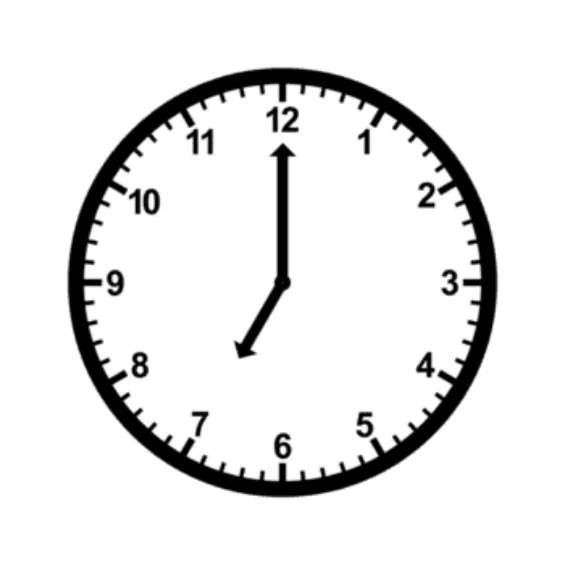
Let’s take a raw example. Imagine that as a child your dad hit you every time he got home from work at 7pm. As an adult, every time 7 o’clock approaches, you start to feel anxious, as if your body were bracing for the blow. You might feel extreme fear, look for somewhere to hide, or simply freeze.
Seven o’clock doesn’t traumatize you. It’s a switch that turns on programming that was already there, that alarm that at some point helped you survive because it made the abuse lighter, or at least more bearable. Your body isn’t reacting to the time, it’s reacting to what that time meant.
How to tell them apart in your daily life
Next time something knocks the ground out from under you, instead of labeling it right away, ask yourself these questions:
Did this overwhelm my capacity to process, or did it hurt but I was able to keep going? If you could keep functioning, you’re probably not facing a new trauma.
Is my reaction proportional to what happened today? When the intensity doesn’t match the situation, it’s usually a sign that something older got activated.
Does this feeling seem familiar? When was the first time you felt it? At what point in your life was reacting this way the best option?
These questions aren’t meant to judge you. If your reaction is out of proportion, it doesn’t mean you’re exaggerating or that “that’s just how you are.” It means your system is doing exactly what it learned to do to protect you.
Back to the unanswered message
Let’s run the exercise with the example from the beginning. Your partner doesn’t text back, a friend doesn’t invite you to a plan, your teacher asks you to speak in public. Does that overwhelm your capacity to process, or does it set off an old alarm? Most of the time, it’s the latter.
And that distinction changes everything. What you feel in those moments is almost never the original wound, it’s the signal that something older got activated. Calling it trauma leaves you fighting the present. Recognizing it as a trigger gives you a clue to get to the root.
Which alarm goes off for you most often, and how long have you known it?
If you notice an alarm that keeps repeating and want to understand where it comes from, we can explore it together in session.
References:
Maté, G., & Maté, D. (2022). The myth of normal: Trauma, illness, and healing in a toxic culture. Knopf Canada.
Saakvitne, K. W., & Pearlman, L. A. (1996). Transforming the pain: A workbook on vicarious traumatization. W. W. Norton & Company.
Fisher, J. (2021, March). Transforming the living legacy of trauma [Interview]. Psychology Today.
Shapiro, F. (2001). Eye movement desensitization and reprocessing: Basic principles, protocols, and procedures (2nd ed.). Guilford Press.